Point your phone at something you own. It reads the label or the signature and writes the record. When it cannot read one it tells you, and you fill in the name yourself.
Built for collectors of work by Black artists, across the Diaspora
Your room
Enter your code and everything you read is kept, so you can come back to it on any device. No email, no password. If you do not have a code, you can still try it without one.
Photograph something you own
One picture of the work. If you can, a second of the label or the signature, which is what lets it name the artist.
Add the first photo to begin.
Tell Faith what happened
Especially if it broke, hung, got the name wrong, or said nothing useful. That is the most valuable thing you can send. One line is plenty, and blunt is more useful than kind. It goes straight to Faith, nowhere else.
Read so far
Your browser opens its print window. Choose Save as PDF as the destination, or on a phone tap the share icon and then Print, then pinch the preview to save it.
What this is
Most people who own art have no record of it. The invoice is in an inbox, the photograph is nine hundred pictures down the camera roll, and the story of the night you bought it lives nowhere at all.
The apps that exist want you to sit down and type all of it in. Nobody does. So this tries the other way round: you take a picture, and it does the typing it can do.
It will not guess. If there is no label and no legible signature, it says so rather than inventing an artist. That restraint is the point, not a limitation.
It is being built for collectors of work by Black artists, African American and across the Diaspora. It will read anything you photograph. But the artists it is meant to know properly, the ones whose records are thinnest and whose work has been documented least, are the reason it exists at all.
Photograph the work. Straight on, daylight if you have it, no flash. Fill the frame.
Photograph the label or the signature. Close up, and get the whole thing in. This is the one people get wrong, because they crop the edge off.
Press read. Ten or fifteen seconds.
The second photo is optional. With only the work, you will get a description and a palette but no name, which is the honest answer.
An example · not your room
Three works off Faith's own walls, showing how much you get depending on what the camera caught. Your room is further down, and it starts empty.
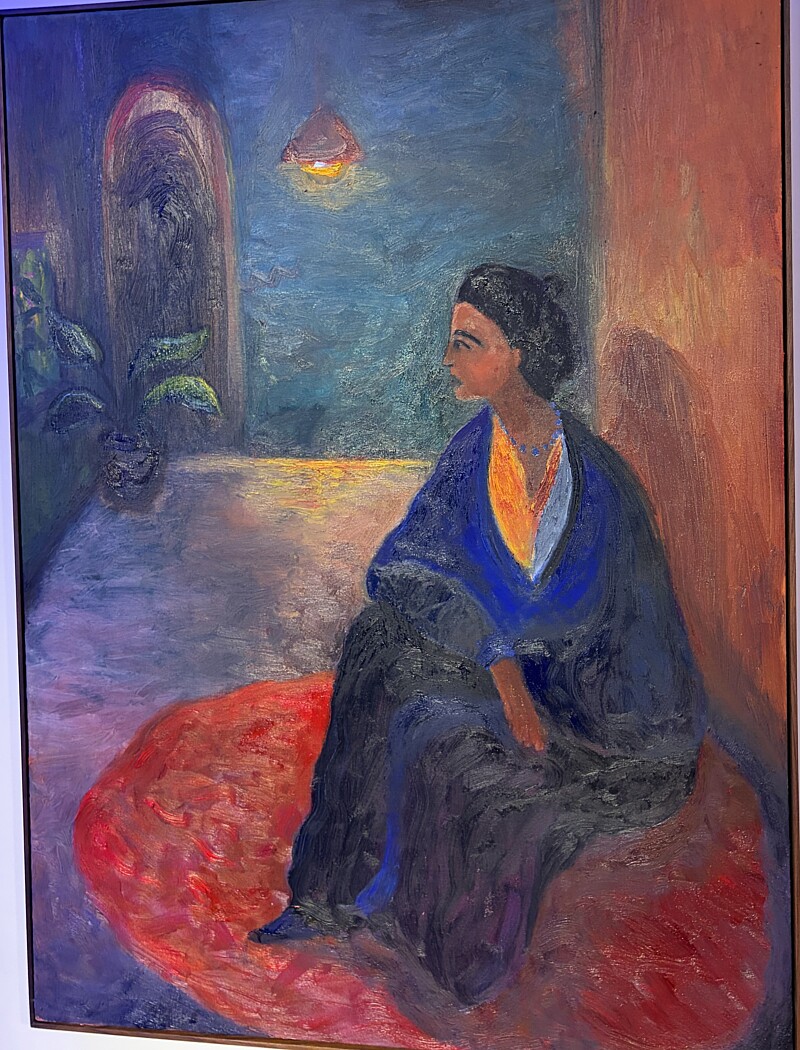
Read from the wall label
Patrick Eugène
[first words] to Return to, 2026
Oil on canvas with handcrafted frame
A woman sits alone on a red rug in a room built out of two temperatures, teal behind her and terracotta beside her, with a lamp burning overhead. Thick, worked paint, the brushmarks left where they fell.
cobaltterracottacrimson
Bought at the David C. Driskell Prize Gala benefit auction at the High Museum. The photograph caught the wall label but cropped its left edge, so it got the year, the medium and the frame, and only part of the title. It reported the fragment rather than finishing the sentence for itself, and it would not turn “…ugène” into a full name until a straighter photo of the card confirmed it.
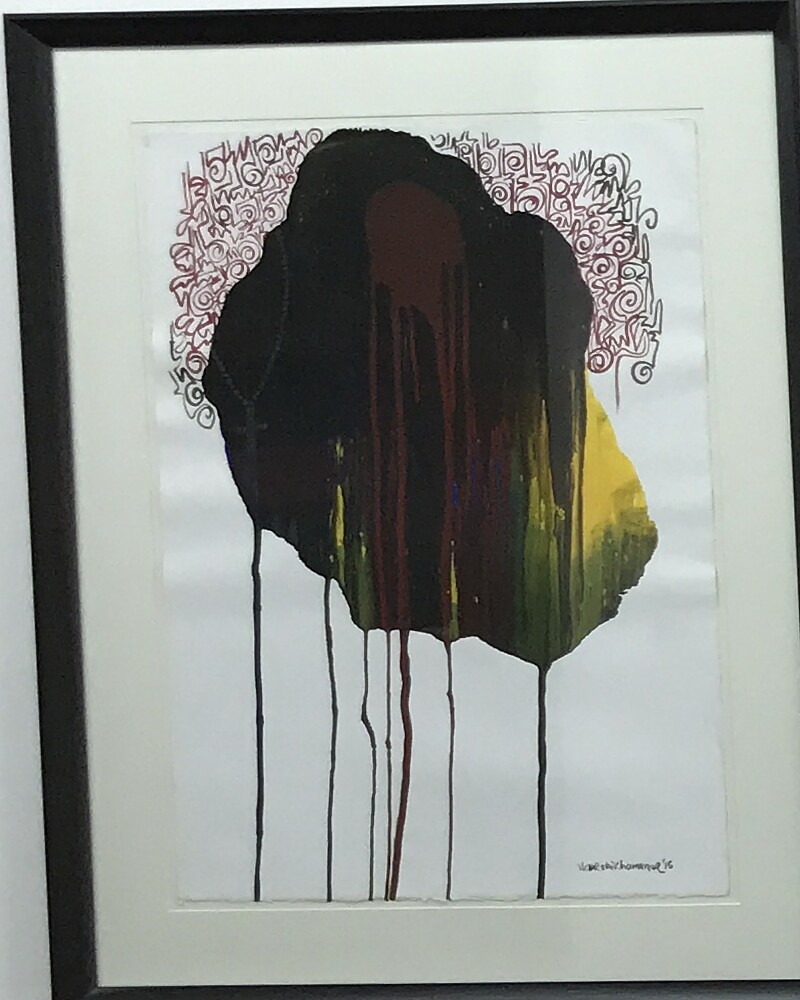
Read from the signature
Victor Ehikhamenor
Untitled, 2016
Ink, pigment and mixed media on paper
A poured dark form with the drips left where they ran, ringed by looping red linework. Ink black against the pale ground of the paper.
ink blackpale greyred
He signs his whole name and the year, lower right, on every sheet. That made this the easiest work in the house to place: no label needed, and the year came off the signature with the name.
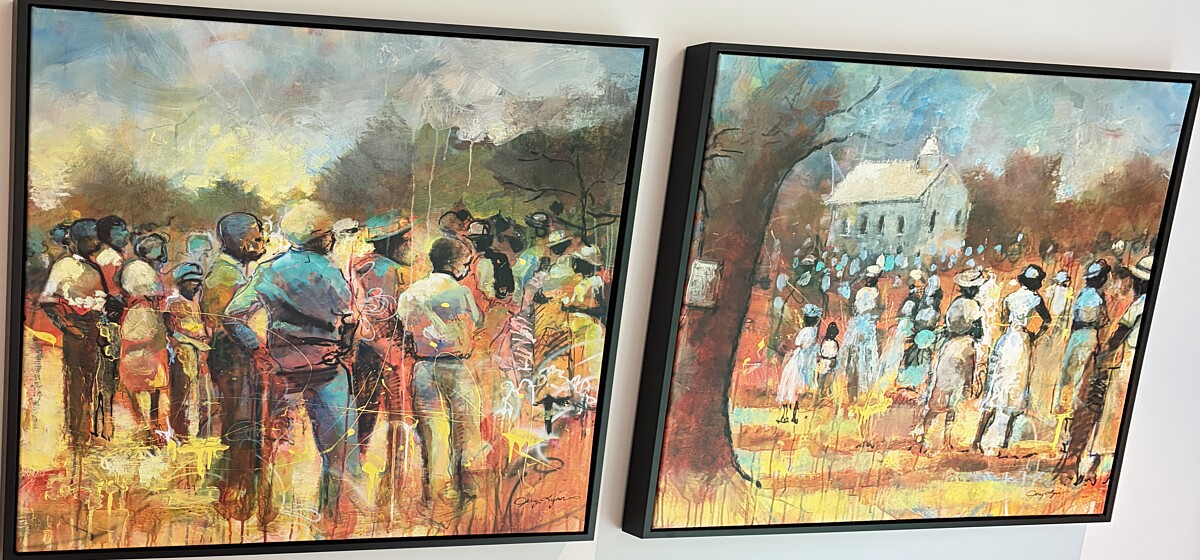
Read from the signature
Jerry Lynn
Untitled diptych
Acrylic and mixed media on canvas, two panels
A crowd gathered under trees on one panel, a congregation outside a white clapboard church on the other. Warm ochre and clay against a bone-coloured sky.
boneochreclay
The signature, lower right on both canvases, was the only thing on this painting that could be read. So there is a name and nothing else: no title, no year, no dimensions. That is the difference a label makes.
A label gives you the whole record. A signature gives you a name and not much more. With neither, it will tell you it found nothing rather than put a name to it, which is the answer it gave on two other paintings in this house.
What happens to your photographs
Worth knowing before you point a camera at your own house.
The photograph you upload is sent to an AI model to be read, and is not kept. What is kept is the record it produced, plus a small picture of the work so you can recognise it in your room. Nothing is sold, shared or shown to anyone else.
A code is a name, not a password. It keeps your room separate from everyone else's, and anyone who knows your code can open your room. Pick something only your people would guess, and do not put anything in here you would mind a stranger seeing. Proper accounts come later if this turns out to be worth building.
It does not record where anything is. No addresses, no rooms, no values, no prices. A list of what you own, not a map to it.